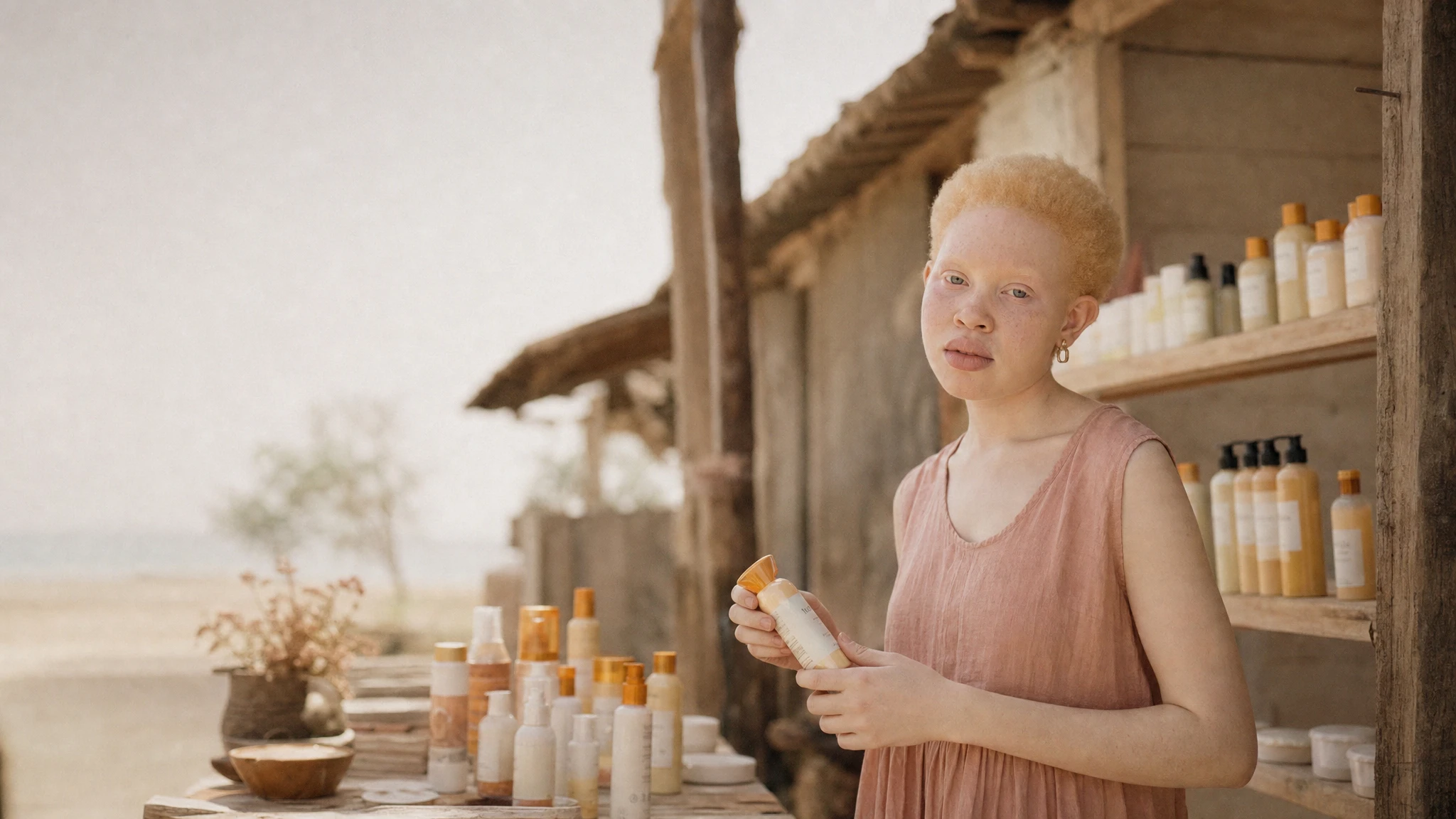
The World Health Organization has added high-SPF sunscreen to its Essential Medicines List, recognising UV protection as a medical necessity for people with albinism.
A small entry in a global medicines catalogue carries considerable weight. The World Health Organization has added high-SPF sunscreen to its Model List of Essential Medicines, formally recognising UV protection as a clinical necessity for people with albinism — not a cosmetic preference, not an optional aid.
The update, reported by The Dermatology Digest, places sunscreen alongside biologics for psoriasis in the latest revision to the WHO list. The list is the reference framework most national health systems use to determine which medicines governments procure, subsidise, and make available in public clinics and pharmacies.
What the Essential Medicines List actually does
Being named on the WHO list does not guarantee access overnight. What it does, according to public health researchers who have studied the list's influence, is remove a layer of bureaucratic ambiguity. Governments that once classified sunscreen as a cosmetic — and therefore excluded it from health budgets and public health programmes — now have a clear international precedent to reclassify it as medicine.
For people with albinism, the distinction is not semantic. Melanin, the pigment absent or severely reduced in people with albinism, is the body's primary defence against ultraviolet radiation. Without it, unprotected skin exposure leads to accelerated cell damage. Skin cancer rates among people with albinism in high-UV environments are substantially elevated, and in parts of Sub-Saharan Africa, where access to sunscreen has historically been limited and costly, the condition is frequently life-limiting.
A decision years in the making
Advocacy organisations including Under the Same Sun and Albinism Society of Kenya have pushed for sunscreen's reclassification for over a decade, arguing that framing it as a beauty product placed an undue financial burden on people with albinism and excluded them from public health infrastructure.
The WHO's decision reflects that sustained pressure. The Dermatology Digest reported the addition as part of a broader 2024 revision cycle in which the organisation updated the list to reflect both new therapeutic evidence and long-standing equity gaps.
The practical effect will depend on national implementation. Countries will need to update their own essential medicines schedules, adjust procurement systems, and in some cases negotiate pricing with manufacturers. Those steps can take months or years. But the WHO designation gives health ministers and procurement officers a foundation to act on — and gives advocates a concrete tool when pushing for change at the national level.
The entry is a formal acknowledgement of what people with albinism and their families have known for a long time: sunscreen is not a luxury. It is care.
Keywords
Core topics and entities mentioned in this summary.