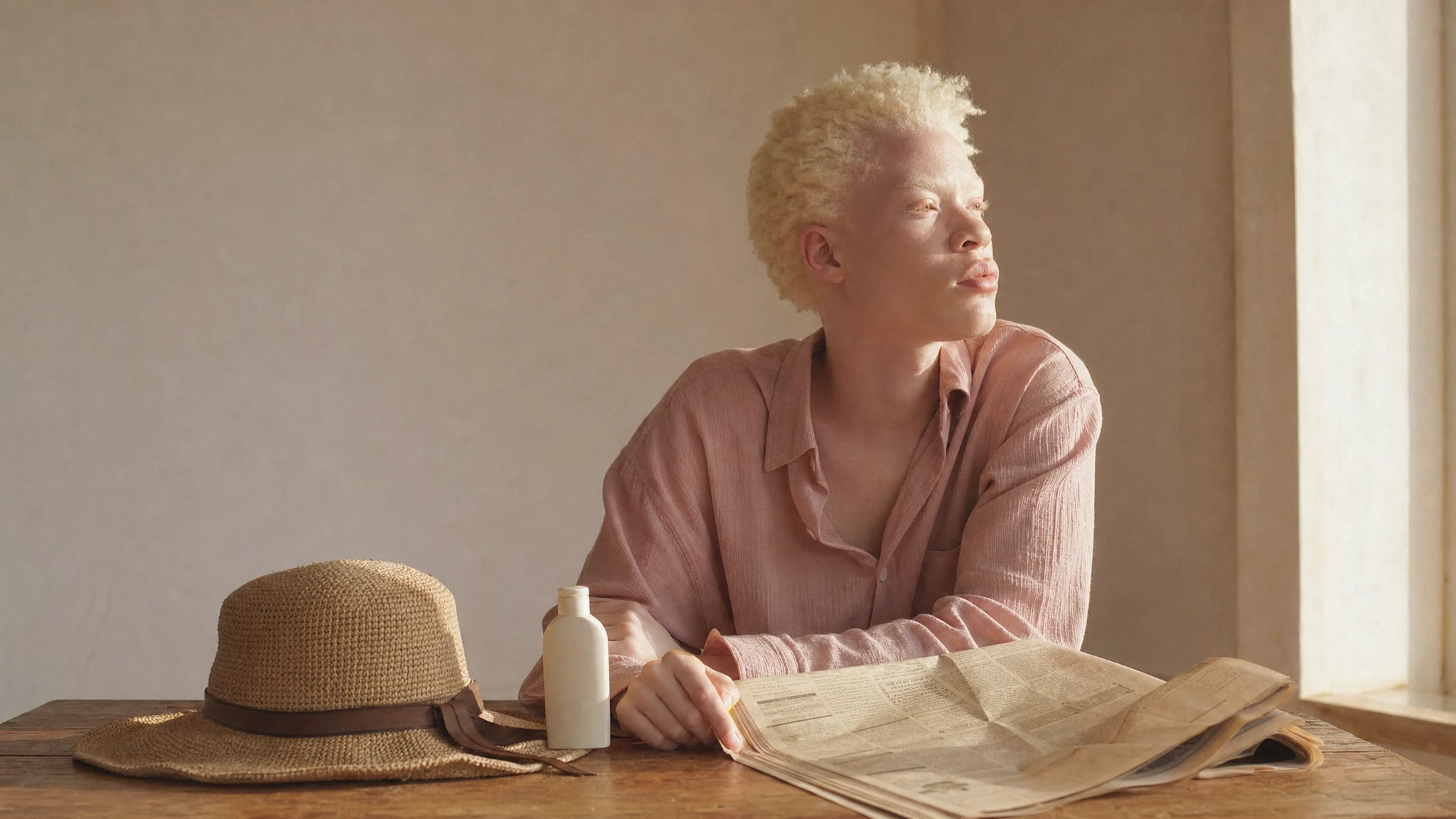
The Hindu published a detailed primer on albinism, covering genetics, vision, skin risk, and the social challenges faced by people with the condition.
A single gene variant — in any of several possible genes — can redirect the body's production of melanin entirely. That biological fact sits at the centre of a new explainer published by The Hindu, which walks general readers through what albinism is, how it is inherited, and what it means to live with it.
Melanin does two jobs: it colours the skin, hair, and eyes, and it shields the retina during its early development. The Hindu reported that when melanin is absent or reduced, both functions are affected. The result is not only a visible difference in pigmentation but a structural difference in how the eye forms — explaining why most people with albinism have some degree of reduced visual acuity, regardless of corrective lenses.
Inheritance and prevalence
The condition is recessive, The Hindu noted, meaning a child must inherit a relevant gene variant from each parent to be affected. Carriers — people who carry one copy — show no outward sign. The publication reported that globally, albinism affects approximately one in 17,000 to 20,000 people, though in some Sub-Saharan African populations the rate rises considerably, reaching as high as one in 1,000 in certain communities according to figures the outlet cited.
Oculocutaneous albinism, which affects the skin, hair, and eyes together, is the most common form. Ocular albinism, affecting vision with less visible effect on skin tone, is rarer and appears more often in males, the article noted.
Sun exposure and lifelong skin care
Because melanin is the body's primary defence against ultraviolet radiation, people with albinism face a significantly elevated risk of sunburn and, over time, skin cancer. The Hindu stressed that daily sun protection — broad-spectrum sunscreen, protective clothing, and shade — is not optional for people with the condition but a medical necessity that must continue throughout life.
The article also noted the social dimension: in many parts of the world, including parts of Africa and Asia, people with albinism face discrimination rooted in myth and misunderstanding. Accurate public information, The Hindu suggested, is itself a form of protection.
The piece does not profile an individual, but its quiet attention to both the biology and the lived experience of albinism makes it a useful reference — the kind that may reach a reader who has never thought carefully about the condition before.
Keywords
Core topics and entities mentioned in this summary.