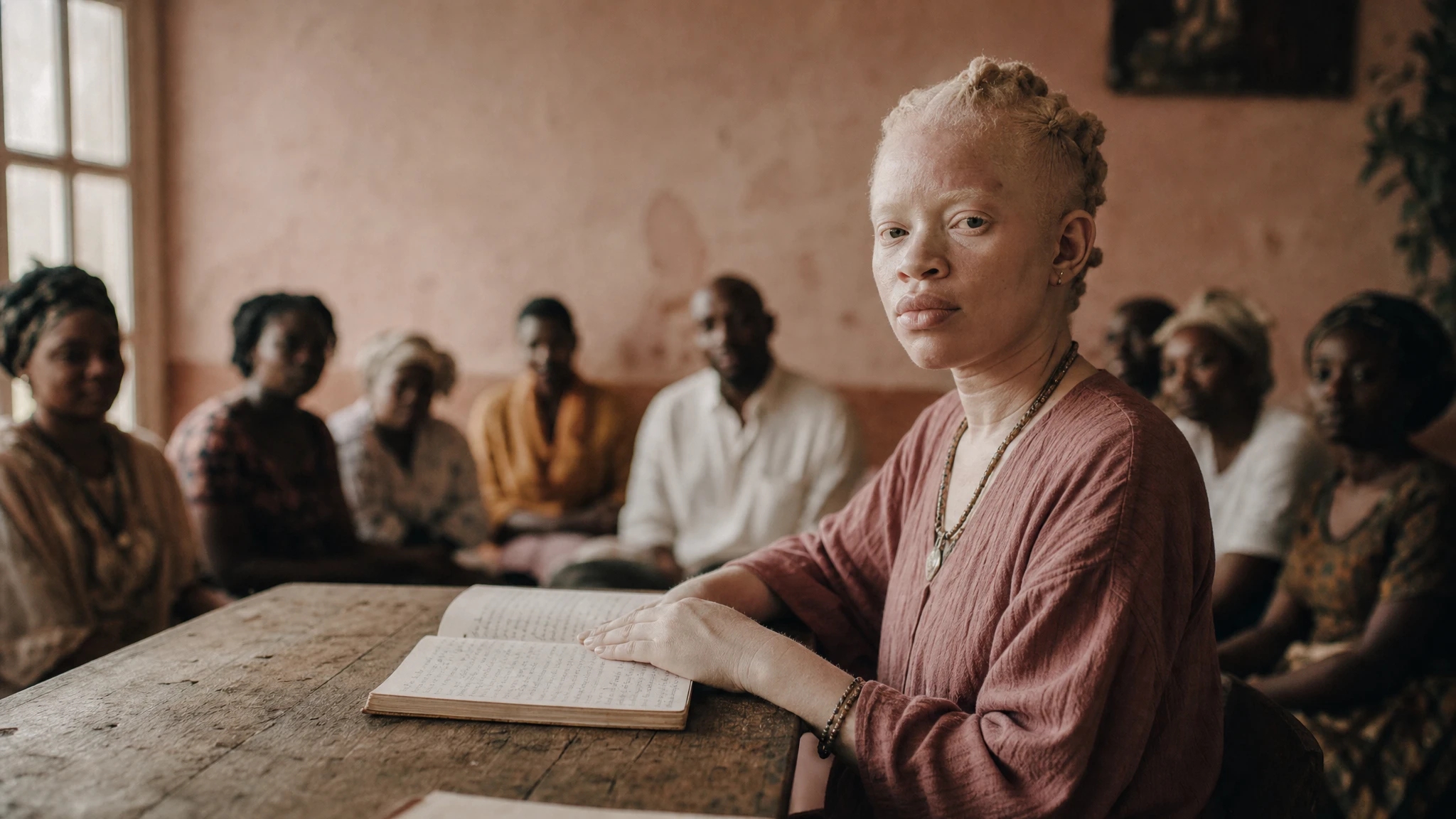
The OHCHR Independent Expert on Albinism has gathered firsthand accounts from people with albinism around the world. The collection documents lived experience across health, safety, and belonging.
The United Nations Human Rights Office (OHCHR) has published a collection of personal accounts from people with albinism, gathered through the office of the Independent Expert on Albinism.
The collection sits within a broader mandate: to document the conditions facing people with albinism globally and bring those conditions into view at the international level. Personal testimony is central to that work.
The OHCHR has long reported that people with albinism face compounding challenges — among them discrimination in education and employment, inadequate access to sun protection and eye care, and, in parts of Sub-Saharan Africa, the threat of ritual violence. The stories gathered here represent the texture behind those findings.
A living record
The Independent Expert mandate was established by the UN Human Rights Council in 2015. Since then, mandate holders have visited countries, submitted reports to the General Assembly, and worked with governments to strengthen legal protections. The stories collection extends that work into something more direct: people describing, in their own words, what daily life looks like.
This kind of documentation matters because policy change tends to follow evidence, and evidence is built from specifics. Aggregated testimony allows the Independent Expert to identify patterns — in access to healthcare, in the language used by teachers and employers, in the distances families travel to find appropriate sunscreen — that statistics alone do not capture.
What the source does not yet confirm
The article as indexed does not provide the full text of individual accounts, specific countries represented, or the number of stories collected. Those details are available directly through the OHCHR platform. Readers seeking the primary material should visit ohchr.org and navigate to the Independent Expert on Albinism section.
What the listing does confirm is that the Office considers lived testimony a formal part of its evidence base — not supplementary colour, but source material.
Keywords
Core topics and entities mentioned in this summary.