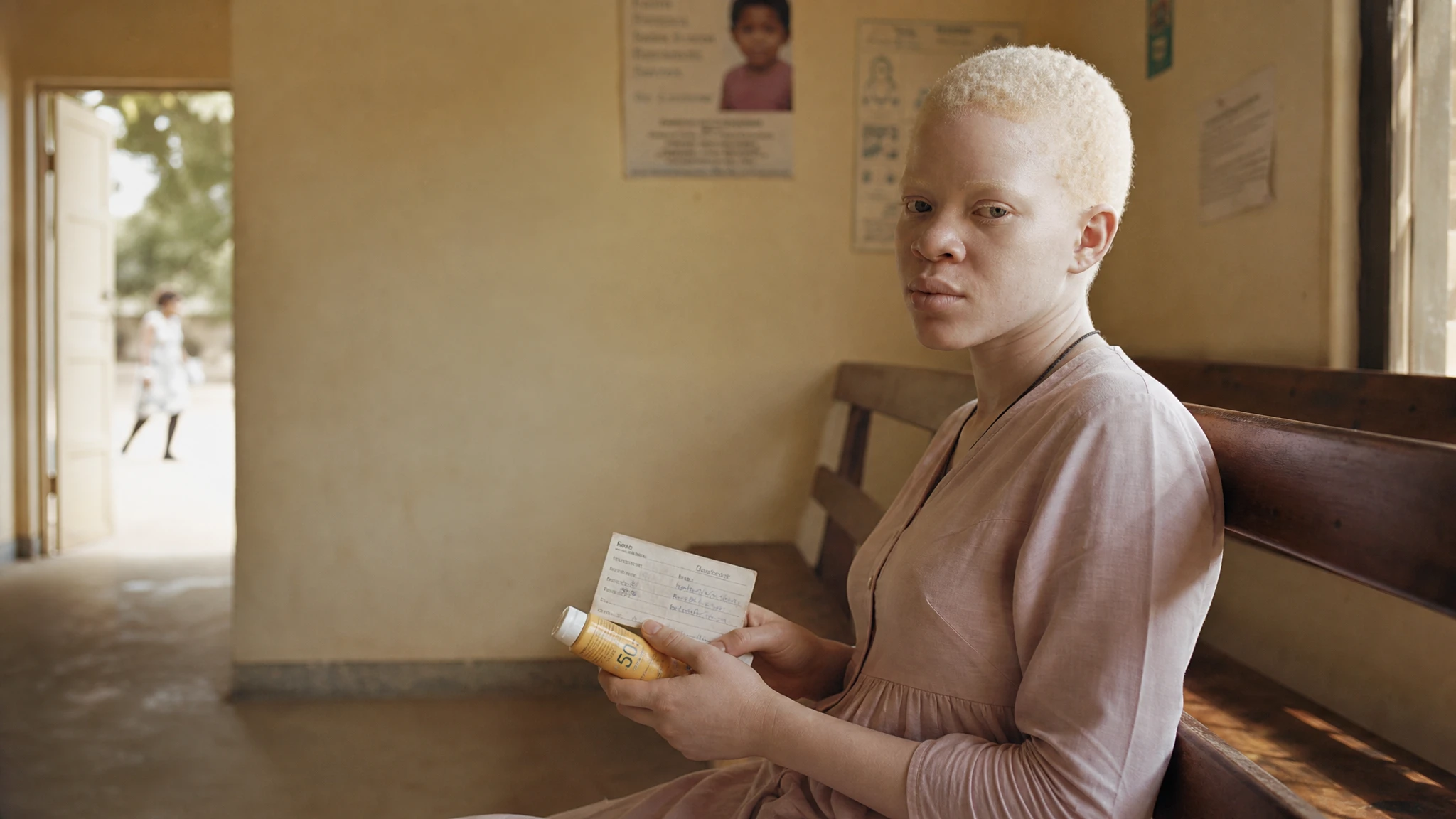
People with albinism and other migrants removed mid-treatment face lasting health risks, Daily Maverick reports. Access to sun protection and dermatology care is among what is lost.
A deportation bus leaves. Inside, according to Daily Maverick, are people who were receiving treatment they will not finish.
South Africa's processing centre operations have displaced thousands of non-nationals in recent months. For most, the disruption is immediate and logistical. For some — including people with chronic conditions who depend on consistent clinical care — Daily Maverick reports the consequences are medical and ongoing.
Healthcare workers cited in the report describe patients removed mid-treatment: courses of medication interrupted, dermatological monitoring discontinued, referrals that will never be followed up. The clinical risks, the workers said, will outlast the processing centres themselves.
People with albinism who have found care in South Africa's public health system are among those affected. Dermatological monitoring and access to sun protection — including high-SPF sunscreen, which is not widely available or affordable across the region — can be discontinued when a patient is deported. Skin cancer risk does not pause at a border.
What healthcare workers reported
Daily Maverick spoke with workers inside and alongside the processing centres. Their accounts describe a system that counts departures but does not account for what departing patients leave behind. One worker, quoted in the report, said the state measures buses filled; healthcare staff measure the cost.
The report does not name individual patients. It centres instead on the systemic pattern: a migration enforcement operation running parallel to, and without coordination with, the public health infrastructure those same people had been using.
For people with albinism specifically, that infrastructure matters. Regular skin checks, access to SPF 50+ sunscreen through pharmacy or clinic networks, and ophthalmological care for low vision are not easily replicated on return to countries where such services are sparse or inaccessible.
The rights dimension
International health law, as Daily Maverick notes, does not permit the withdrawal of emergency or ongoing critical care on the basis of immigration status. Healthcare workers quoted in the report described the current operations as creating conditions that breach that standard — not through a single act, but through the accumulated effect of removal on active treatment.
Organisations working on migrants' rights in South Africa have called for medical screening before removal and continuity-of-care protocols for people mid-treatment. The report does not indicate whether the government has responded to those calls.
The processing centres are presented by authorities as an orderly resolution to irregular migration. The workers Daily Maverick interviewed describe something else: a gap between what the state records and what patients carry with them when they go.
Keywords
Core topics and entities mentioned in this summary.