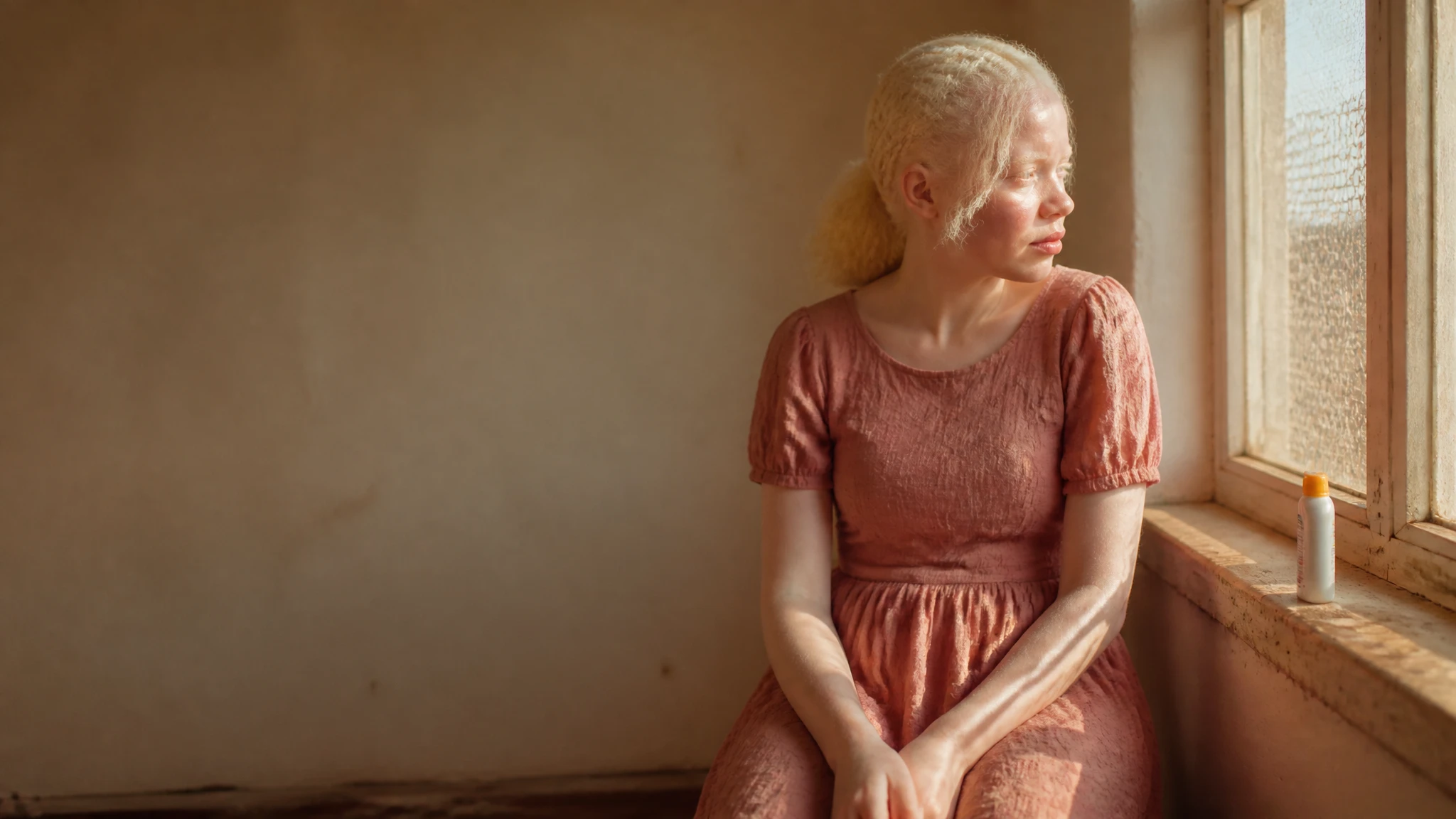
Medical scheme membership in South Africa has flatlined while insurer profits grow. People with albinism, who rely heavily on specialist care, feel the gap.
In South Africa, the number of people enrolled in private medical schemes has barely moved in years. Yet the schemes themselves have continued to report strong profits, according to reporting by GroundUp.
The gap between stagnant membership and rising costs points to a system under pressure — one that falls hardest on people who need specialist care most. For people with albinism, that pressure is not abstract. Regular dermatology appointments, ophthalmology visits, and high-SPF sunscreen — often not covered or only partially reimbursed — add up over a lifetime.
GroundUp reported that medical scheme contributions have climbed well above inflation for years, while the pool of members paying into those schemes has not grown to match. The result, analysts told GroundUp, is that the burden per member rises each year.
A system that prices people out
The Council for Medical Schemes, South Africa's regulatory body, has documented this trend across its annual reports. Schemes have shifted more costs onto members through higher co-payments and benefit limits, GroundUp found. Preventive care — including sun-damage screening — is frequently the first category to be reduced.
For people with albinism, preventive dermatology is not optional. Skin cancer rates among people with albinism in sub-Saharan Africa are significantly higher than in the general population, according to research published in peer-reviewed journals on tropical dermatology. Without affordable, regular access to screening, lesions that are treatable when caught early go undetected.
Sunscreen presents a parallel problem. High-SPF formulations recommended for people with albinism are rarely covered by standard medical scheme benefits in South Africa, and their out-of-pocket cost places them beyond reach for many families, advocacy organisations in the country have noted.
Why affordability is a medical question
GroundUp's reporting frames the medical cost crisis as a broad equity issue: when schemes become unaffordable, lower-income households drop out, concentrating sicker and older members in the remaining pool, which drives costs higher still. The cycle, economists quoted by GroundUp said, is difficult to interrupt without structural intervention.
South Africa's proposed National Health Insurance system is intended, in part, to address this spiral — though its implementation timeline remains uncertain and contested.
For people with albinism navigating this landscape today, the practical reality is a series of calculations: which appointment to skip, which prescription to delay, which tube of sunscreen to ration until the end of the month.
GroundUp's investigation does not focus specifically on albinism, but the structural story it tells is one this community knows closely.
Keywords
Core topics and entities mentioned in this summary.