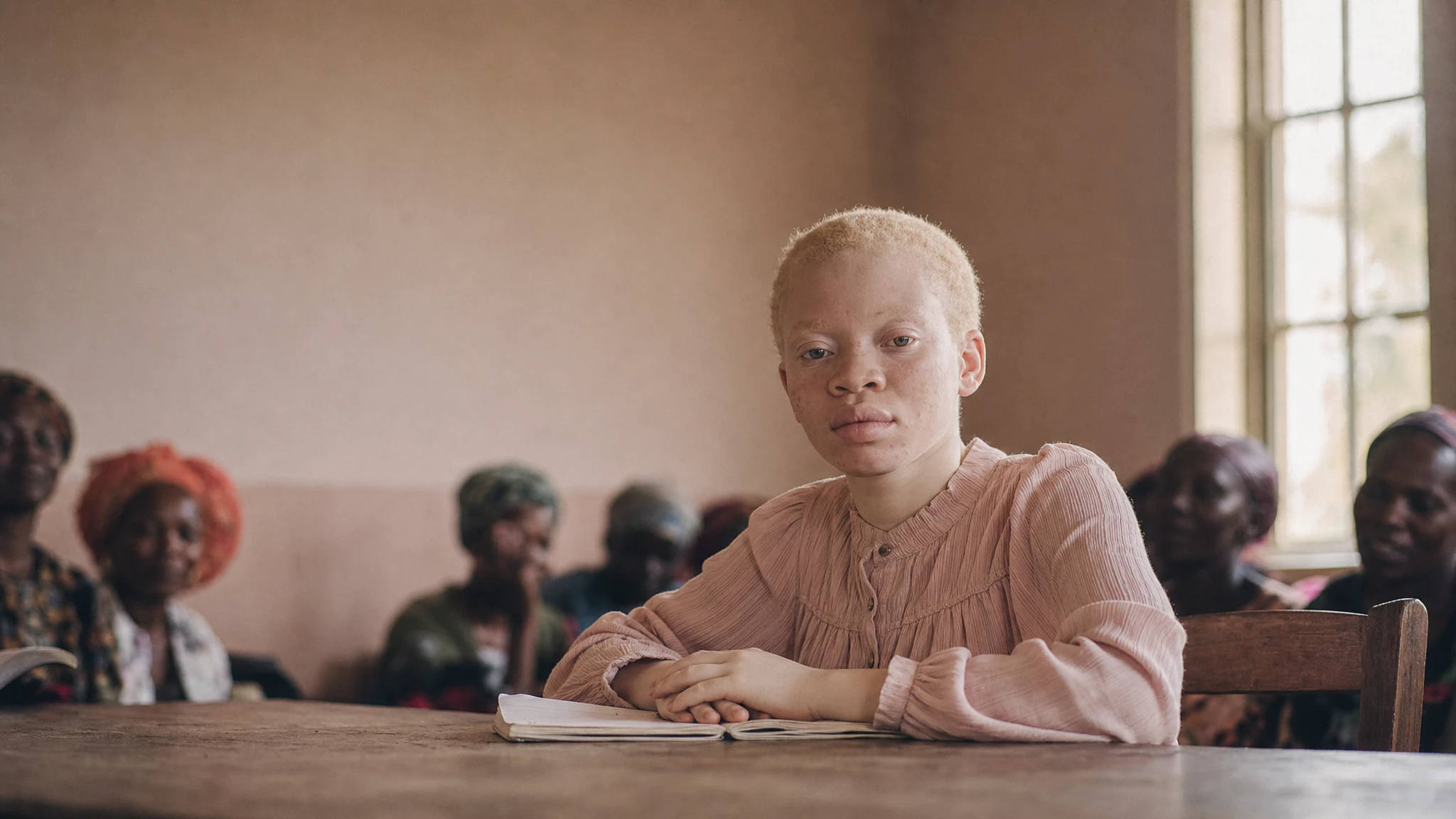
A new report documents the threats facing people with albinism globally, from ritual attacks in Africa to daily discrimination in education and employment.
A ritual attack leaves a family without a child. A student is turned away from a classroom. A job application goes unanswered. According to reporting by IPS News, these are not isolated moments — they form a pattern that reaches across continents.
IPS News reports that people with albinism continue to face two distinct but overlapping dangers: physical violence, often rooted in the belief that body parts of people with albinism carry magical properties, and systemic discrimination in access to education, healthcare, and work.
The violence is documented and ongoing
The attacks are most concentrated in Sub-Saharan Africa, according to IPS News. In countries including Tanzania, Malawi, and Mozambique, people with albinism have been killed or injured for their body parts, which are used in rituals believed to bring wealth or luck. Human rights organisations have recorded hundreds of attacks across the region over the past two decades.
Under Voices advocacy, the United Nations has repeatedly called on member states to treat these killings as hate crimes and to prosecute perpetrators under strengthened legal frameworks. IPS News notes that enforcement remains inconsistent, and many cases do not reach trial.
Discrimination shapes daily life
Beyond physical danger, IPS News reports that people with albinism face entrenched barriers in ordinary life. Children are excluded from mainstream schooling, often because schools lack the low-vision support tools they require. Adults describe being passed over in hiring, or working in environments without adequate shade or sun-protective equipment.
Vision impairment, which affects the majority of people with albinism, is frequently unaddressed due to limited access to specialist eye care, according to the report. Skin cancer risk — elevated significantly by the near-total absence of melanin — compounds the picture in regions where sunscreen is expensive or unavailable.
Advocates cited by IPS News have pushed for albinism to be recognised not only as a medical condition but as a protected characteristic under national anti-discrimination law in more countries. Several nations have made legislative progress; many have not.
The reporting by IPS News places the experiences of people with albinism within a wider human rights frame — one that connects physical safety, healthcare access, and equal participation in public life as inseparable concerns.
The article does not resolve these questions. It records them, which is a different and necessary thing.
Keywords
Core topics and entities mentioned in this summary.