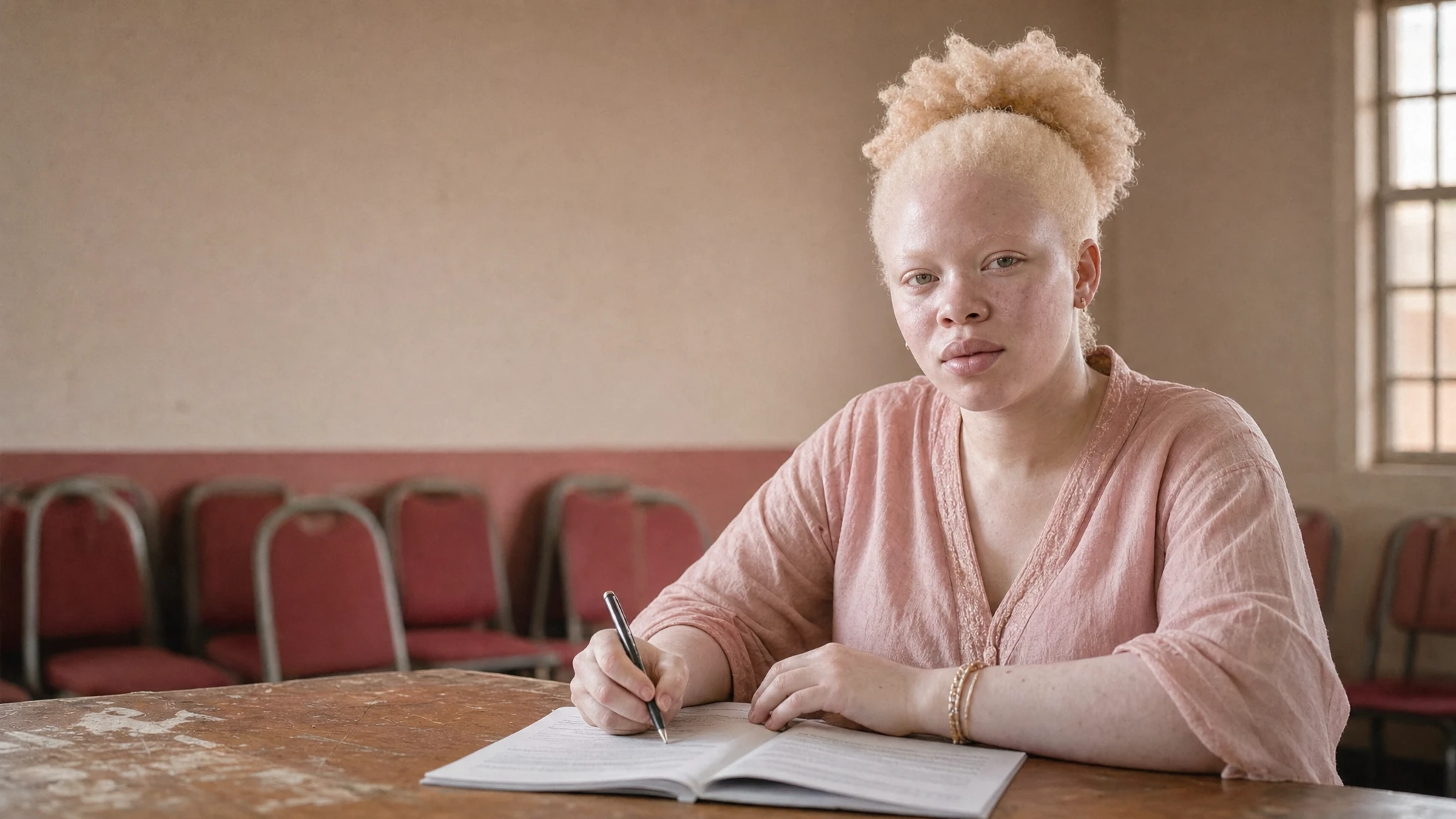
A new Human Rights Watch report details the discrimination, violence, and exclusion that people with albinism face across multiple countries.
A report from Human Rights Watch puts a precise problem on record: people with albinism around the world face discrimination in schools and hospitals, violence in their communities, and exclusion from the protections that human rights law is supposed to guarantee.
Human Rights Watch documented these conditions across several countries, finding that the risks are not incidental. They are structural. People with albinism are denied access to education, turned away from healthcare, and in some regions, targeted for physical attacks connected to beliefs about their bodies.
The organisation reported that children with albinism are among the most exposed. In some settings, they are pulled from school because of stigma or because classrooms cannot accommodate their visual impairment. In others, families face pressure that isolates both child and parent from community life.
In parts of Sub-Saharan Africa, Human Rights Watch noted that the violence takes a specific and severe form. Body parts of people with albinism are sought for use in rituals, under the false belief that they carry supernatural properties. This has led to killings and mutilations, with some families living in sustained fear for their children's safety.
The report also pointed to a gap between legislation and lived experience. Several countries have laws that nominally protect people with albinism, Human Rights Watch found, but enforcement is inconsistent and prosecutions are rare. Survivors and families described little confidence in local authorities.
Access to sunscreen and eye care — basic medical needs for people with albinism — was identified as another persistent failure. Human Rights Watch reported that in low-income countries, these essentials are frequently unavailable through public health systems, leaving people with albinism at heightened risk of skin cancer and avoidable vision loss.
The organisation called on governments to enforce existing protections, improve access to healthcare, and address the social conditions that allow discrimination to persist without consequence.
The full report is available through Human Rights Watch.
Keywords
Core topics and entities mentioned in this summary.