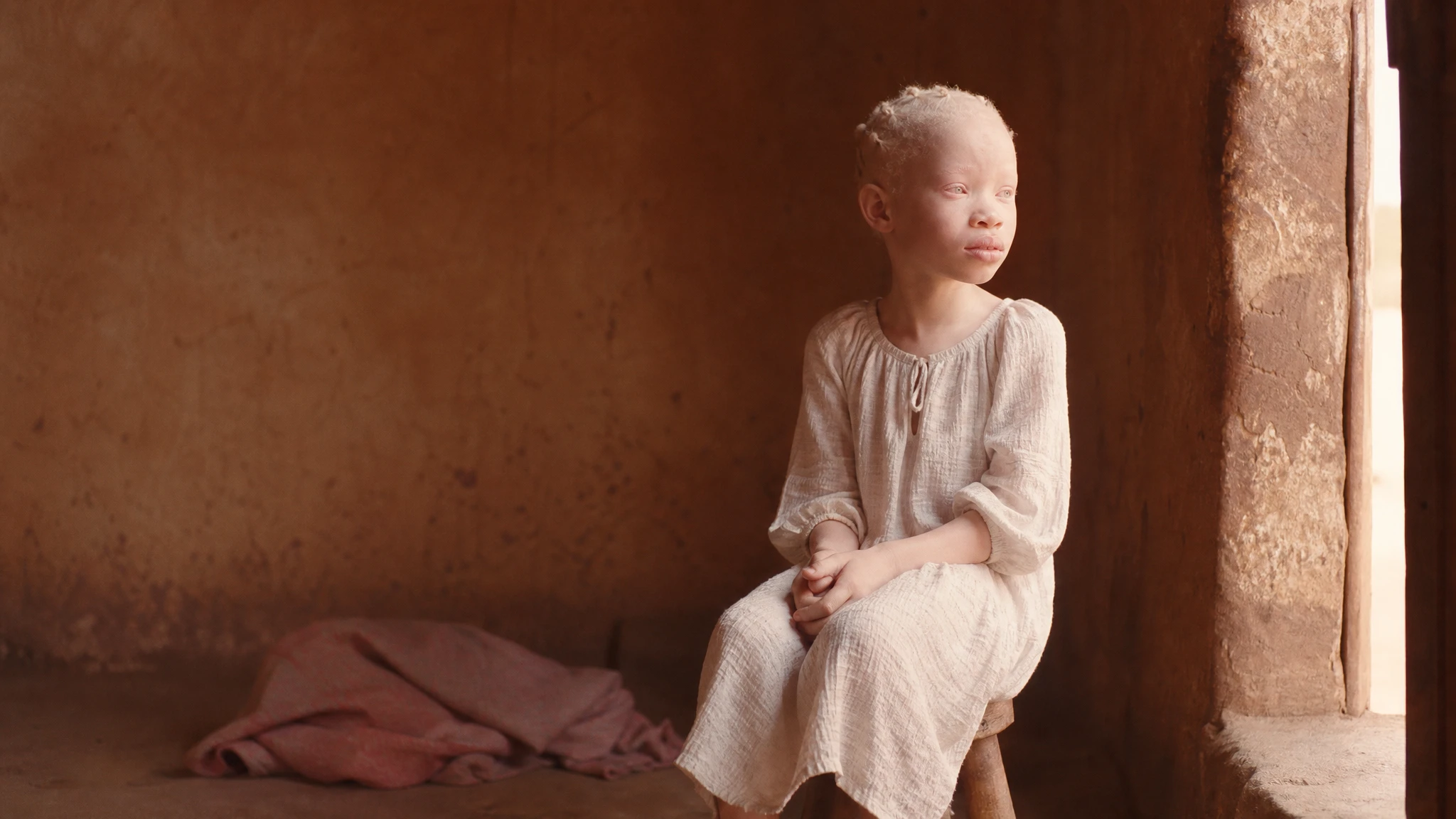
A New York Times opinion piece follows a young girl with albinism whose grandmother called for her death at birth. Her story reflects a pattern of family rejection documented across Sub-Saharan Africa.
At birth, before a child can speak or be named, a family member's words can determine whether she lives. The New York Times published an opinion piece tracing the story of one girl with albinism whose grandmother, upon seeing her, said she should be killed.
The piece does not treat this as exceptional. It treats it as a pattern.
Across parts of Sub-Saharan Africa, children born with albinism face rejection that begins inside the home, according to documentation by organisations including Under The Same Sun and the UN Independent Expert on the rights of persons with albinism. Grandmothers, fathers, and extended family members have been recorded demanding that newborns with albinism be abandoned, hidden, or killed — often rooted in the belief that the child carries a curse, or that the mother was unfaithful.
The girl at the centre of the Times piece survived that first moment. What the opinion traces is what survival looks like after it — the years shaped by a grandmother's verdict, by the knowledge that someone who should have protected her wanted her gone.
What rejection inside the family costs
Researchers and advocates have documented that violence against people with albinism does not begin only with strangers or with witchdoctors. The UN Independent Expert has reported that family-based rejection is among the earliest and most damaging forms of harm, affecting children's access to education, healthcare, and a stable sense of identity.
The Times piece approaches this through one life rather than through data. That choice carries its own argument: that the scale of the problem is only legible when reduced to one girl, one grandmother, one sentence spoken in a room.
The girl's journey, as the opinion frames it, is not a story of rescue. It is a story of living with what was said, and of constructing a self in the space that sentence left behind.
Why this story sits inside a larger one
The New York Times framing this as opinion rather than reported news is itself a signal. Opinion space is where a publication asks readers to sit with discomfort rather than absorb information and move on. The placement asks something of its audience.
For the albinism community, the story is neither new nor distant. Family rejection, supernatural belief, and the specific vulnerability of newborns with albinism have been documented for years by Amnesty International, the African Albinism Network, and successive UN reports. What changes is who is telling it, and to which room.
A story like this, carried by the Times to its global readership, reaches people who have never encountered the words "person with albinism" in any other context. That reach matters — not because awareness alone changes anything, but because ignorance has consequences too.
Keywords
Core topics and entities mentioned in this summary.