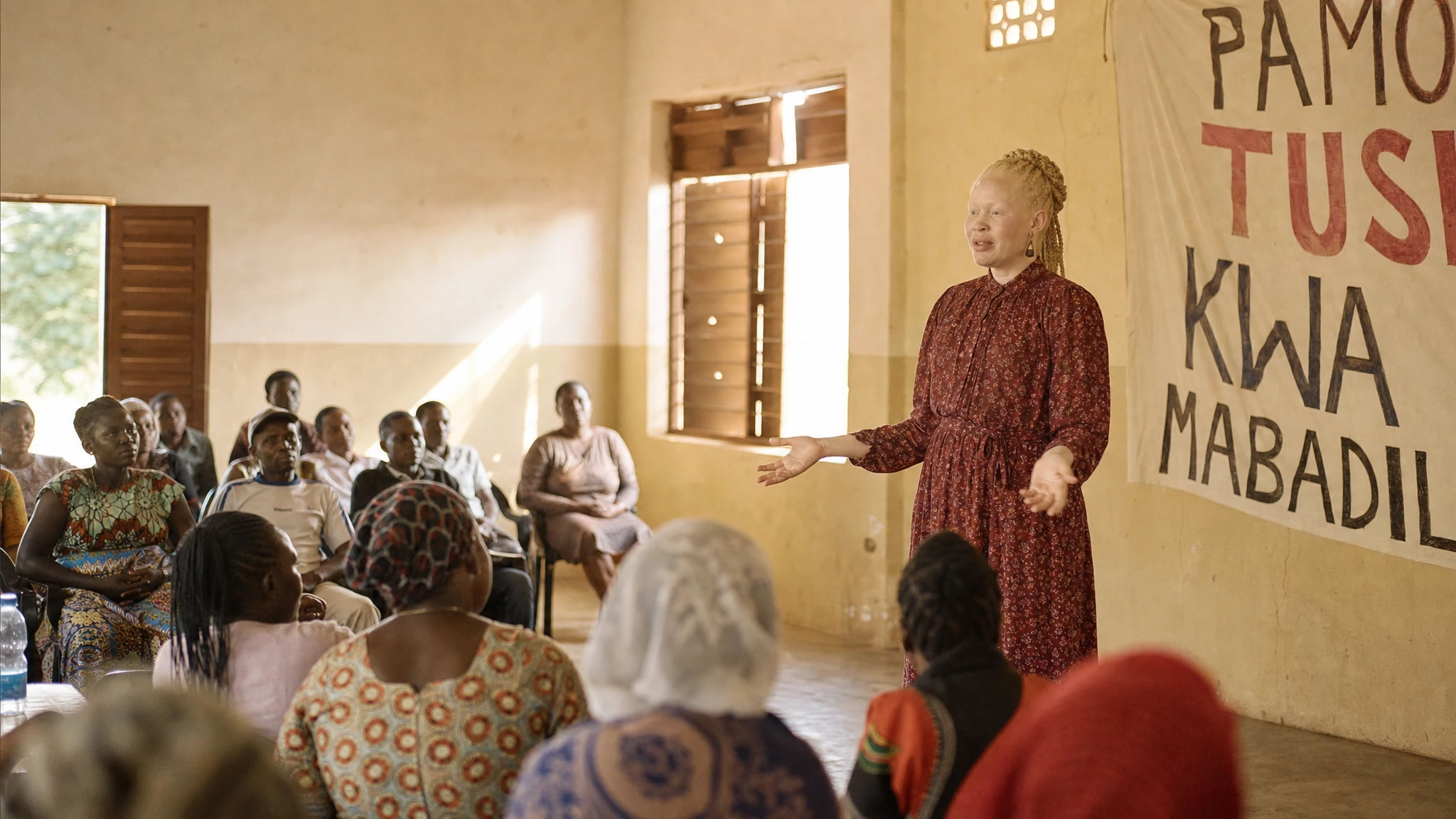
Advocates in Kenya used Albinism Awareness Day to press for stronger protections and services for people with albinism across the country.
Every June 13, the calendar offers a moment to stop and look — at what exists, and at what does not. In Kenya this year, that moment arrived with public gatherings, community voices, and a clear message from advocates: the support systems in place are not yet enough.
Albinism Awareness Day drew attention across Kenya to the conditions that people with albinism navigate daily, according to Standard Media. Advocates used the occasion to call on the government and civil society to expand access to services — among them healthcare, sunscreen, and educational accommodations.
Sunscreen remains one of the most concrete and persistent gaps. People with albinism produce little to no melanin, leaving their skin highly vulnerable to UV radiation. In Kenya, as in much of East Africa, consistent access to high-SPF sunscreen is limited by both cost and distribution, according to organisations working in the region.
Vision impairment is another concern that surfaced during the day's discussions. Most people with albinism experience significant visual challenges from birth, and advocates noted that corrective tools — glasses, low-vision aids, specialised classroom support — are not reliably available in many parts of the country, Standard Media reported.
Beyond medical needs, speakers pointed to the social dimensions of daily life: discrimination, exclusion from employment, and the psychological weight of stigma that accumulates quietly over time.
Kenya is home to an estimated 90,000 to 150,000 people with albinism, according to figures cited by regional advocacy groups. The country does have frameworks in place — including disability legislation that covers people with albinism — but the translation of policy into lived experience remains uneven, advocates said.
The day also served as a platform for younger voices. Students and youth representatives spoke about their experiences in schools, describing both the gaps in accommodation and, in some cases, the specific teachers and communities that had made a difference.
For the people who gathered, June 13 was less a celebration than a reckoning — a fixed point on the year from which to measure what has changed and what has not.
Keywords
Core topics and entities mentioned in this summary.