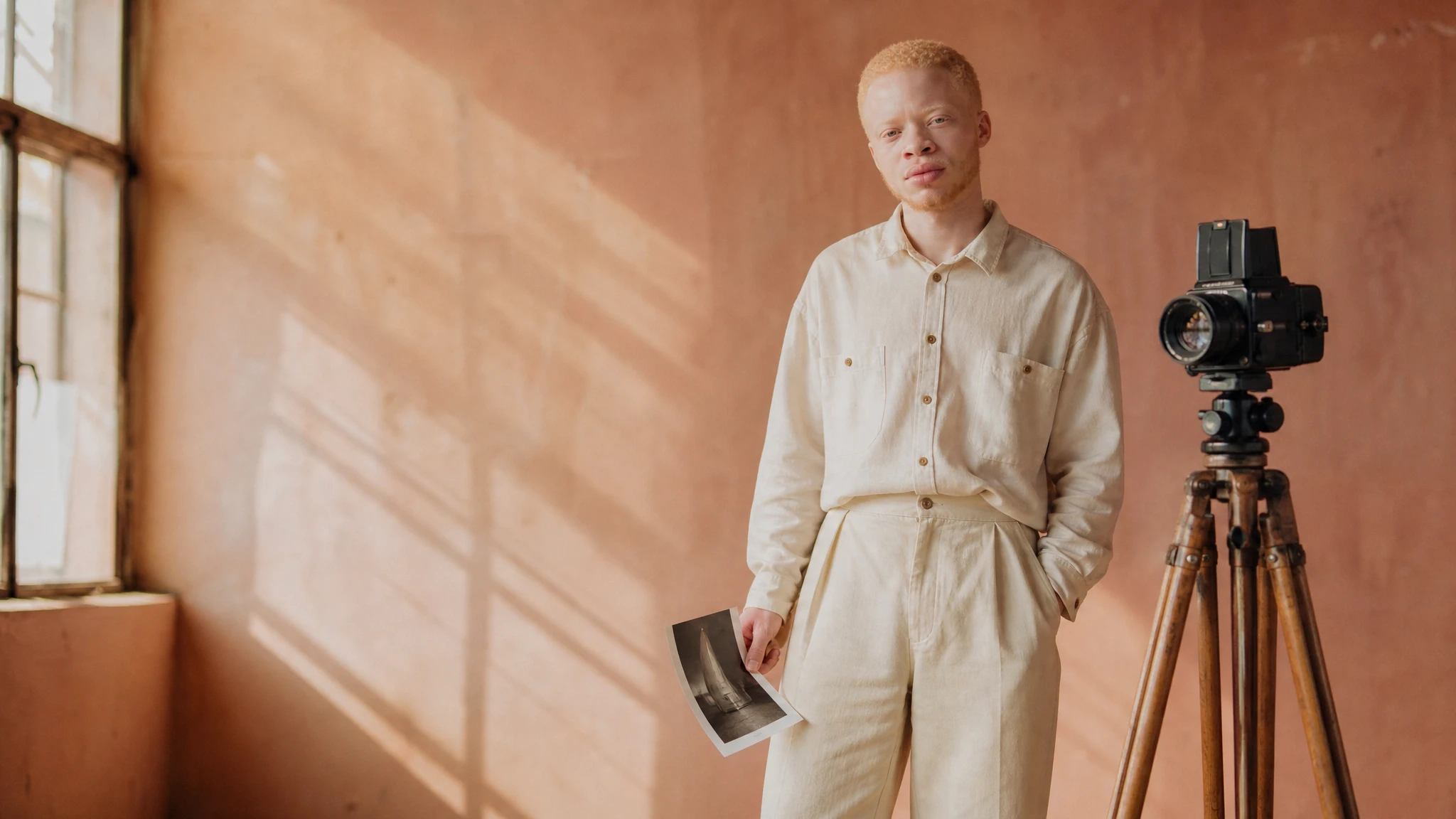
Nigerian photographer Aderopo Afolabi is using portraiture to challenge how albinism is seen and represented in West Africa.
A camera, pointed with intention, can do what legislation alone cannot. For Aderopo Afolabi, a Nigerian photographer with albinism, the lens has become the primary tool for reshaping how his community is seen — and how it sees itself.
BellaNaija reported on Afolabi's work in the context of International Albinism Awareness Day, observed each year on 13 June. The day was established by the United Nations to draw attention to the rights and experiences of people with albinism worldwide.
Afolabi told BellaNaija that representation is where the problem begins. Images of people with albinism in Nigerian and broader West African media tend toward the exceptional or the pitiful, he said — rarely the ordinary. His portraits resist both poles. His subjects are photographed in their own spaces, wearing their own clothes, looking wherever they choose to look.
The work is also personal. Afolabi has spoken about growing up with albinism in Lagos, where stares and unsolicited commentary were part of daily life. Photography, he said, gave him a way to reclaim the act of looking — to be the one behind the frame rather than always in front of it.
Visibility as a form of accuracy
Afolabi's project sits within a longer conversation about how albinism is depicted across Sub-Saharan Africa. Myths and misconceptions remain widespread, according to human rights organisations working in the region, and visual culture both reflects and reinforces those beliefs. Photographs that centre dignity rather than difference are, in that context, doing specific documentary work.
He told BellaNaija that he wants younger people with albinism to see themselves in images that do not require them to be exceptional. Ordinariness, he suggested, is itself a form of respect.
International Albinism Awareness Day 2025 carries the theme chosen by the UN to centre community voices — a framing that Afolabi's practice embodies directly. His photographs are not made for awareness campaigns or charity materials. They are made, he said, because the images should exist.
The full interview with Afolabi is available on BellaNaija.
Keywords
Core topics and entities mentioned in this summary.