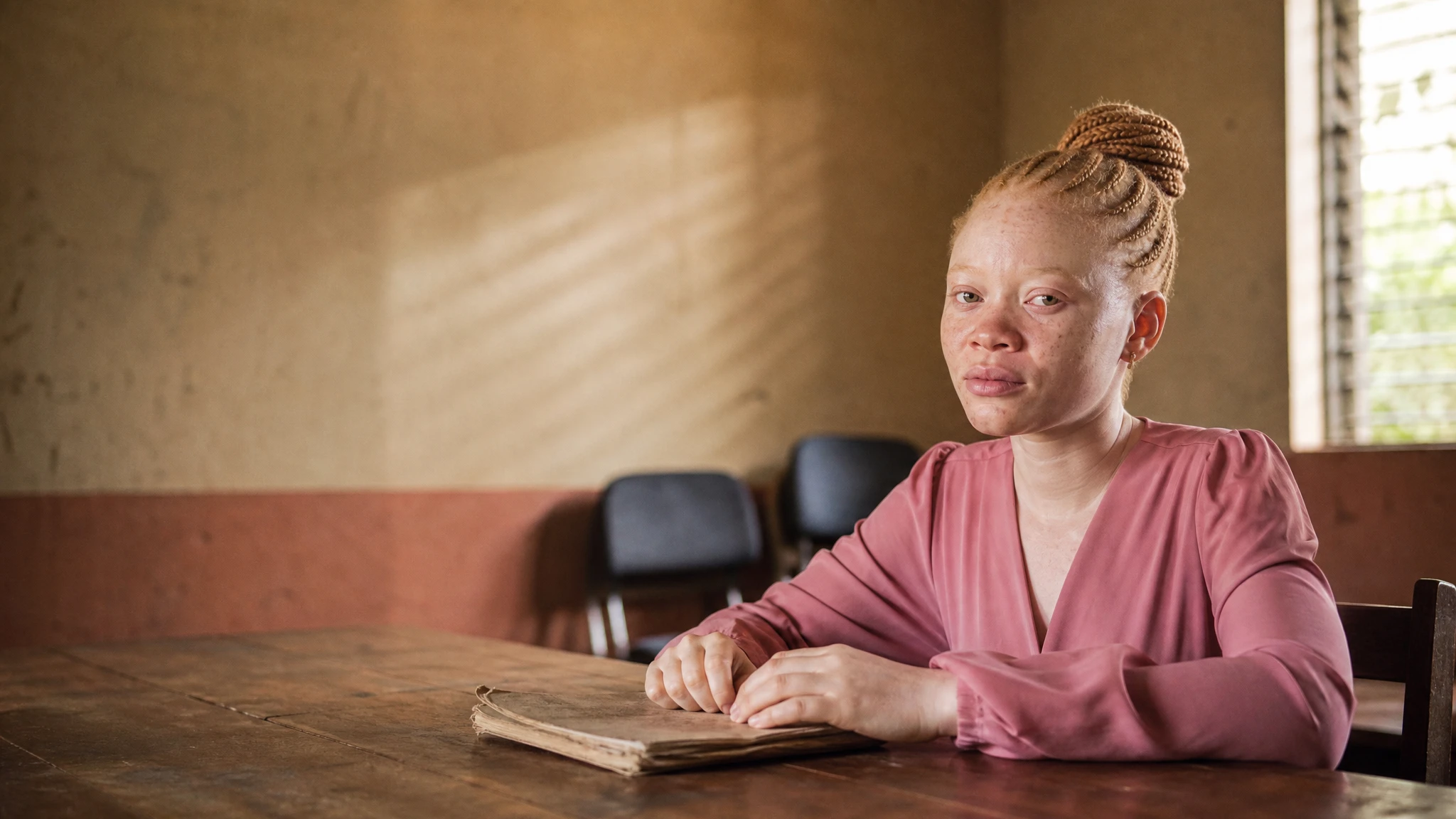
A Human Rights Watch report documents how people with albinism in Malawi face barriers to employment, education, and basic services. The findings call for urgent government action.
A woman selling vegetables at a roadside market in Blantyre. A student turned away from a classroom because her school has no large-print materials. These are the kinds of moments that Human Rights Watch documented in a new report on the economic exclusion of people with albinism in Malawi.
The report, published by Human Rights Watch, finds that people with albinism in Malawi face compounding barriers across nearly every area of economic life. Discrimination in hiring, limited access to assistive devices for low vision, and inadequate sunscreen provision in public health facilities are among the conditions the organisation documented. Human Rights Watch said these barriers were not incidental — they were structural.
What the report found
According to Human Rights Watch, many people with albinism in Malawi are unable to access formal employment because employers discount their capabilities or because workplaces make no accommodation for low vision. The report found that people with albinism are disproportionately concentrated in informal, low-income work — a pattern the organisation linked directly to discrimination rather than ability.
On health, Human Rights Watch reported that sunscreen, which people with albinism require daily to prevent skin cancer, is inconsistently available through the public health system. Many people told researchers they purchased sunscreen out of pocket when they could afford it, and went without when they could not. Skin cancer rates among people with albinism in sub-Saharan Africa are significantly elevated, according to prior medical research, making sunscreen access a matter of life expectancy, not comfort.
Human Rights Watch also documented gaps in the education system. Children with albinism often have low vision that goes unsupported in classrooms — no magnification tools, no adapted materials, no seating adjustments near chalkboards. The organisation said this reduced their ability to complete schooling and narrowed their economic prospects as adults.
What HRW is calling for
Human Rights Watch called on the Malawian government to take specific steps: integrate sunscreen into the national essential medicines list, train teachers to support students with low vision, and enforce existing disability non-discrimination law in hiring. The organisation said Malawi has legal frameworks in place but that implementation has been weak.
The report is part of a broader pattern Human Rights Watch has documented across eastern and southern Africa, where people with albinism face both physical danger from ritual attacks and quieter, slower forms of exclusion in daily economic life. This report focuses on the latter — the kind of exclusion that does not make news but shapes the arc of a person's life.
For communities across Malawi, the findings are unlikely to be surprising. What the report adds is documentation: named conditions, described patterns, and a formal record held by an international organisation with the means to press governments for change.
Keywords
Core topics and entities mentioned in this summary.