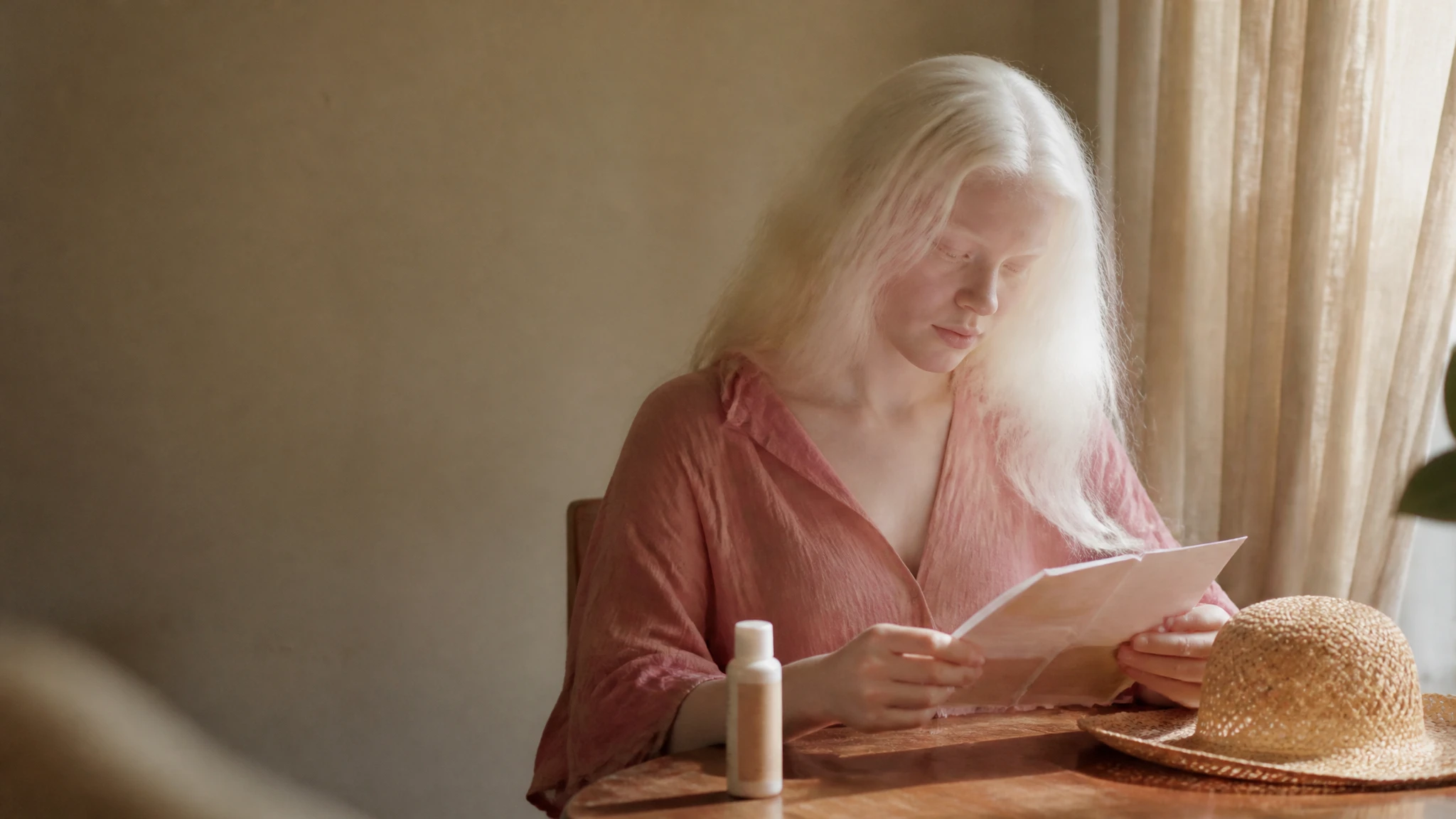
A Health.com overview details how reduced melanin shapes the daily health needs of people with albinism, from UV exposure to vision care.
Melanin does more than determine colour. According to Health.com, the pigment plays a structural role in the development of the eyes, skin, and hair — which means its absence or reduction, as in albinism, has consequences that reach well beyond appearance.
Albinism is a genetic condition, Health.com reported, caused by mutations that affect the body's ability to produce melanin. It is present from birth and occurs across all ethnicities. The degree of pigment reduction varies depending on the type of albinism a person has.
Skin and sun exposure
Without sufficient melanin, skin has little natural protection against ultraviolet radiation. Health.com noted that people with albinism face a significantly elevated risk of sunburn and, over time, skin damage that can develop into skin cancer. Daily sun protection — covering clothing, broad-spectrum sunscreen, and shade — is described by the source as essential rather than precautionary.
Hair colour, too, is affected. Health.com reported that hair in people with albinism ranges from white to light brown depending on the type and the individual, and that colour may darken slightly with age in some cases.
Vision
The eyes carry some of the most significant health implications. Because melanin contributes to the development of the retina and the optic nerve pathways, its absence affects how visual information is processed, Health.com explained. The source listed several common conditions: nystagmus (involuntary eye movement), photophobia (sensitivity to bright light), reduced visual acuity, and strabismus (misalignment of the eyes).
These are not uniform across all people with albinism. Health.com noted that the degree of visual impairment varies, and that many people with albinism use corrective lenses, tinted glasses, or low-vision aids.
Regular eye examinations are recommended by the source, alongside skin checks with a dermatologist — particularly given the elevated skin cancer risk over a lifetime of sun exposure.
Health.com also distinguished between oculocutaneous albinism, which affects the skin, hair, and eyes, and ocular albinism, which primarily affects vision with little visible change to skin or hair tone.
The article serves as a clear reference point for anyone seeking to understand the medical landscape of albinism — a useful foundation, though lived experience, as people with albinism consistently note, adds layers that a clinical overview alone cannot carry.
Keywords
Core topics and entities mentioned in this summary.