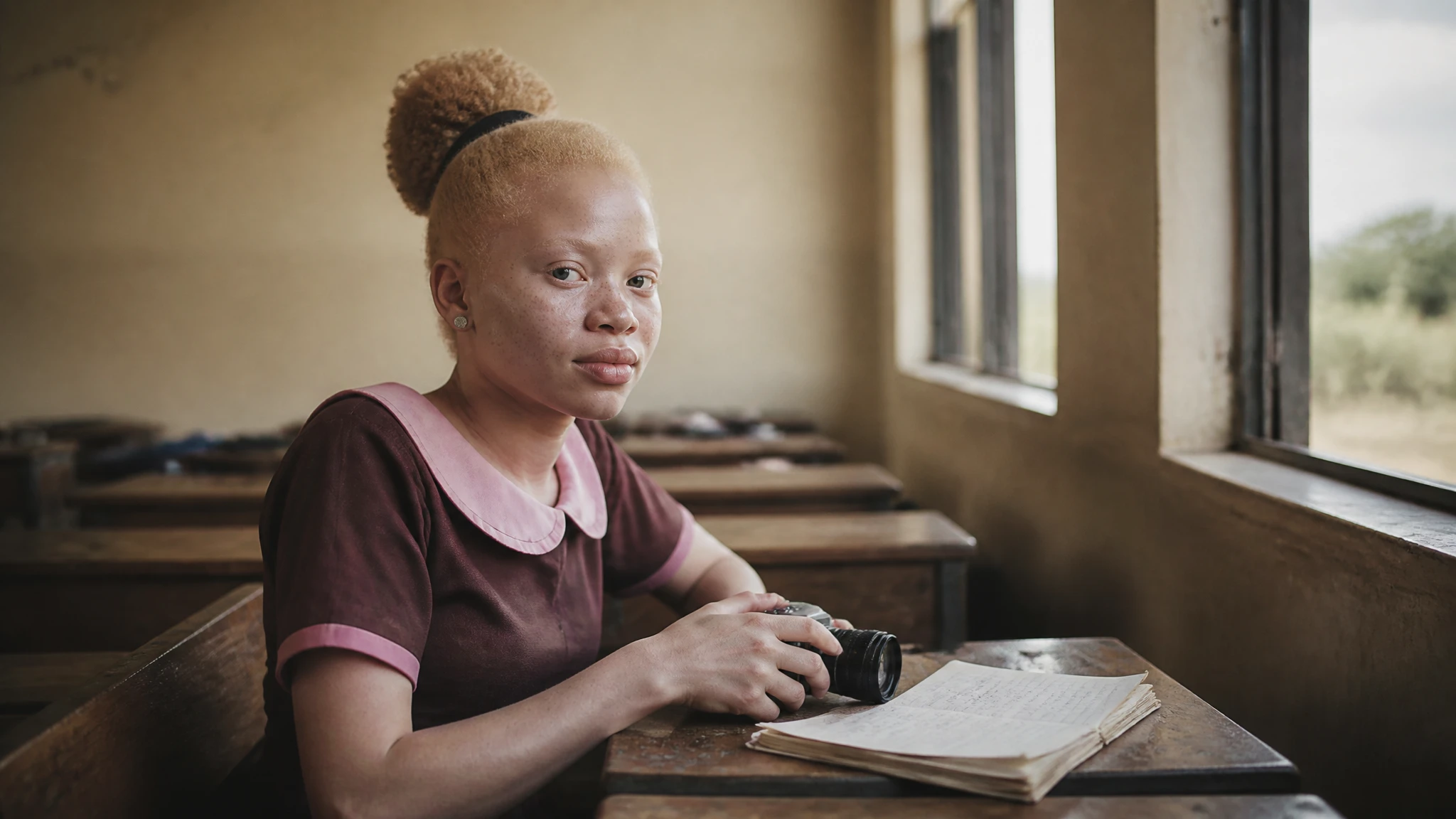
A new study asked adolescents living with disabilities in Ghana to document their own lives. Their images and words challenge what adults assume about their prospects.
A photograph taken by a teenager says something an interview cannot. When researchers in Ghana handed cameras to adolescents with disabilities and asked them to document their worlds, the resulting images became evidence — of ambition, of daily life, of what these young people actually see when they look ahead.
According to The Conversation Africa, roughly 8% of Ghana's population lives with a disability. Adolescents make up a disproportionately high share of that figure, a pattern researchers link to Ghana's notably young population base, where those aged 15 to 35 represent the dominant demographic group.
The study used a participatory photography method, giving young people the tools to represent their own experiences rather than having adults speak for them. This approach, The Conversation Africa reported, produced accounts of resilience alongside clear-eyed descriptions of structural barriers — in schooling, in mobility, in how communities regard disabled youth.
The findings matter for the albinism community specifically. In Ghana and across West Africa, young people with albinism frequently live at the intersection of visual impairment, skin vulnerability, and social stigma. Standard surveys rarely capture how these pressures combine, or how a teenager navigates all of them simultaneously across a single school day.
What the study surfaced, according to The Conversation Africa, was not a uniform experience of hardship. Participants described futures they were actively planning for — careers, education, relationships. The photographs themselves showed this: images of books, of friends, of the small physical adaptations young people had made to manage their environments without institutional support.
Researchers noted that policy in Ghana has historically been built on assumptions about what disabled adolescents need, rather than on direct accounts from those adolescents themselves. Giving participants authorship over their own documentation shifted that dynamic, at least within the study.
The gap between what young people with disabilities want and what systems provide them remains wide, the report concluded. Closing it, researchers suggested, begins with asking the question the study asked — and then listening to the answer in whatever form it arrives.
Keywords
Core topics and entities mentioned in this summary.