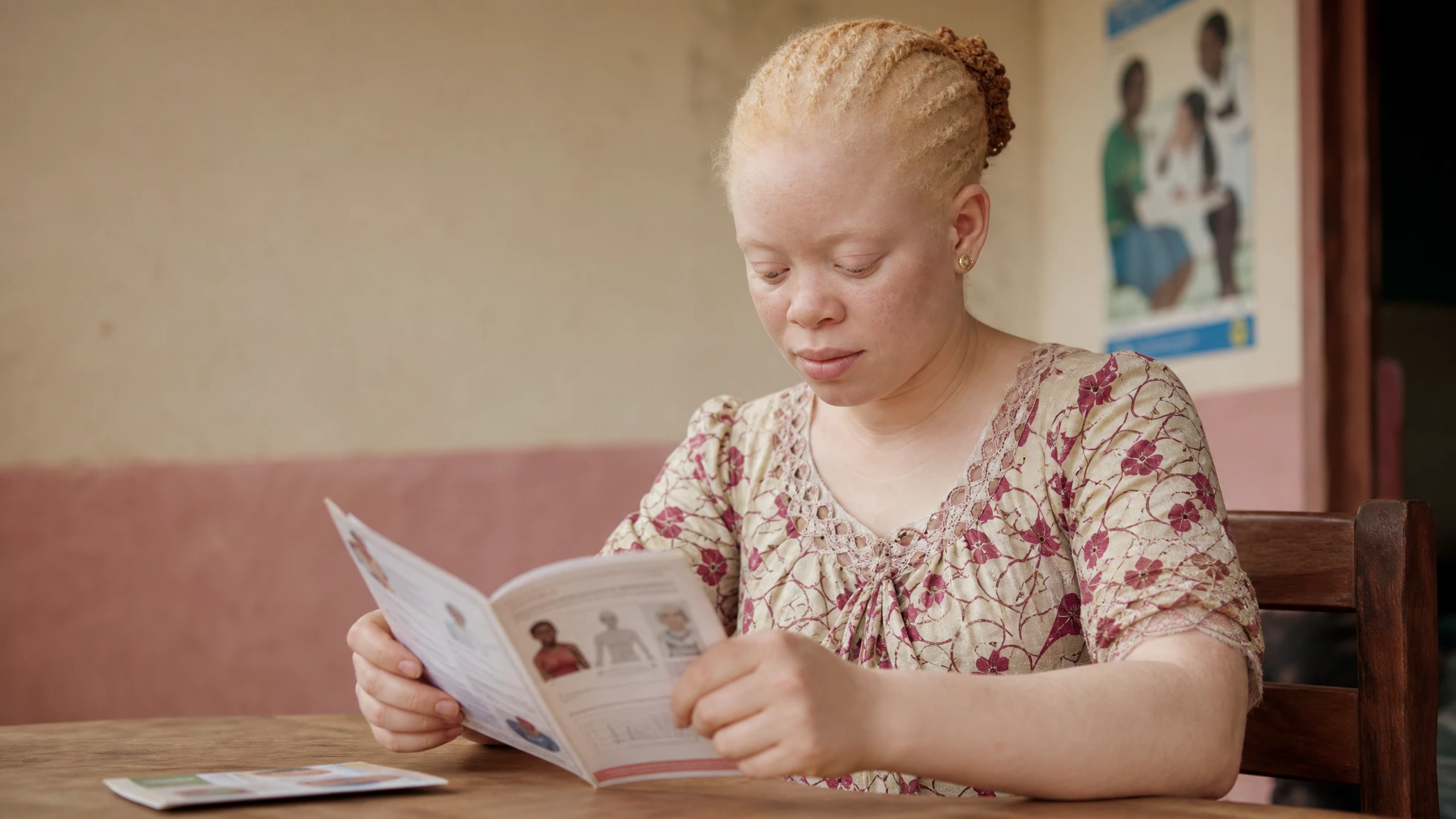
A Ghanaian dermatologist's claim that bleaching causes 'self-induced albinism' has drawn attention — and requires careful correction for the albinism community.
A phrase is circulating in Ghana that deserves a closer look. Dr. Anaba, speaking to CitiNewsroom, described skin bleaching as a form of "self-induced albinism" — a comparison intended to warn against the practice, but one that conflates two very different conditions.
Albinism is a genetic condition. It is present from birth, caused by inherited variants that reduce or eliminate melanin production in the skin, hair, and eyes. Skin bleaching is a cosmetic practice involving the deliberate application of chemical agents to lighten skin tone. The two are not the same, and treating them as equivalent risks deepening existing misconceptions about what albinism actually is.
What Dr. Anaba said
According to CitiNewsroom, Dr. Anaba used the phrase to underscore the long-term damage that bleaching chemicals inflict on skin. His concern was the degradation of melanin — the pigment that protects skin from ultraviolet radiation. The warning itself carries weight: dermatologists have long documented that bleaching agents can cause thinning of the skin, increased UV sensitivity, and a higher risk of skin cancer.
But the framing matters. People with albinism already navigate a landscape dense with misinformation — myths about their bodies, their vision, and their place in society. Language that treats albinism as a consequence of bad choices, even metaphorically, adds to that burden.
Why the distinction is worth making
Melanin reduction in people with albinism is genetic and involuntary. The skin of a person with albinism has not been chemically altered; it simply produces little or no melanin due to inherited gene variants, most commonly affecting the OCA1 or OCA2 pathways, according to published medical literature. The UV sensitivity that results is real and significant — but it is not a cautionary tale. It is a physical characteristic that requires practical management: sunscreen, protective clothing, and regular dermatological care.
Skin bleaching, by contrast, is a practice with documented health risks that dermatologists across Africa and beyond have been working to address. That is a legitimate public health conversation. It simply does not need albinism as its reference point.
The albinism community in Ghana and across West Africa has spent years working to correct harmful comparisons and stereotypes. A phrase like "self-induced albinism", however well-intentioned, lands inside that ongoing effort.
Keywords
Core topics and entities mentioned in this summary.