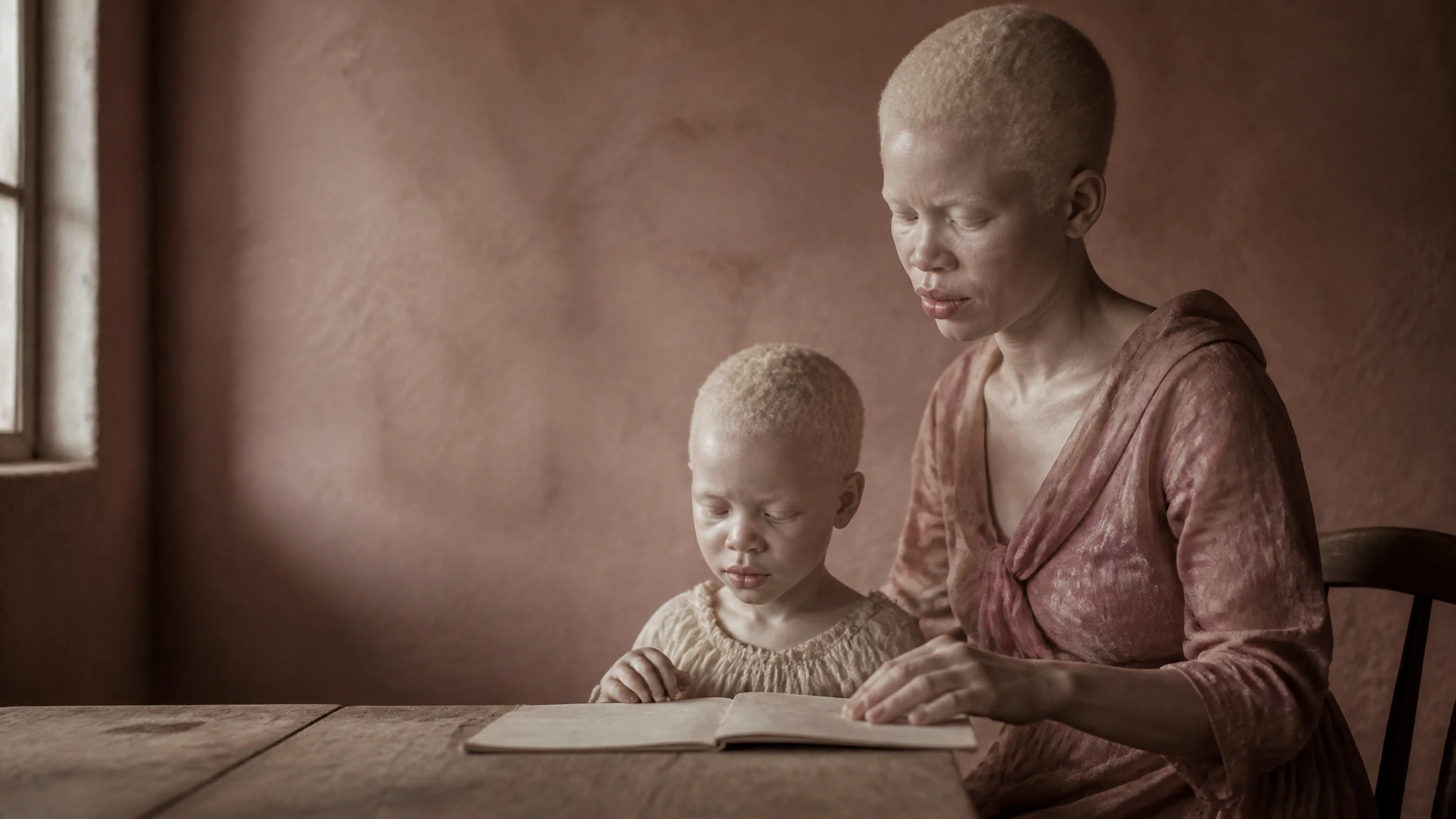
A UN Independent Expert report finds that women and children with albinism face compounded discrimination rooted in gender, age, and appearance. The findings call on states to act.
In a report submitted to the UN Human Rights Council, the Independent Expert on the enjoyment of human rights by persons with albinism identified women and children as carrying a disproportionate share of the risks faced by the broader albinism community.
The report, catalogued as A/HRC/43/42, found that discrimination does not arrive in a single form. According to the Independent Expert, women and girls with albinism face intersecting pressures — from family rejection and forced marriage to sexual violence and exclusion from healthcare — that compound the vulnerabilities already created by their condition. The Expert noted that these experiences are often invisible in national data, because most states do not disaggregate statistics by both disability and gender.
Children at particular risk
The report drew particular attention to children. According to the Independent Expert, children with albinism are at risk of abandonment at birth, denial of education, and, in some regions, targeted violence connected to the belief that their body parts carry ritual power. The Expert reported that mothers of children with albinism are themselves frequently blamed, stigmatised, or abandoned by partners and communities following a child's birth.
The Independent Expert urged states to ensure that child protection frameworks explicitly name albinism as a protected characteristic, and that birth registration systems are strengthened so children with albinism are not rendered stateless through non-registration.
Access to education and healthcare emerged in the report as two of the most concrete areas where gaps persist. The Expert noted that children with albinism often require low-vision support and sun-protective materials that schools are not equipped to provide. Women, the report observed, face additional barriers to reproductive healthcare and are rarely included in consultations about policies that directly affect them.
The Independent Expert called on member states to collect disaggregated data, revise national action plans to reflect the specific situations of women and children with albinism, and engage organisations led by people with albinism in the design of any response.
The report was presented at the forty-third session of the Human Rights Council. Its findings build on earlier work by the mandate, which has tracked attacks, legal gaps, and social exclusion across multiple regions since the Independent Expert position was established in 2015.
The full text of A/HRC/43/42 is available through the Office of the United Nations High Commissioner for Human Rights.
Keywords
Core topics and entities mentioned in this summary.