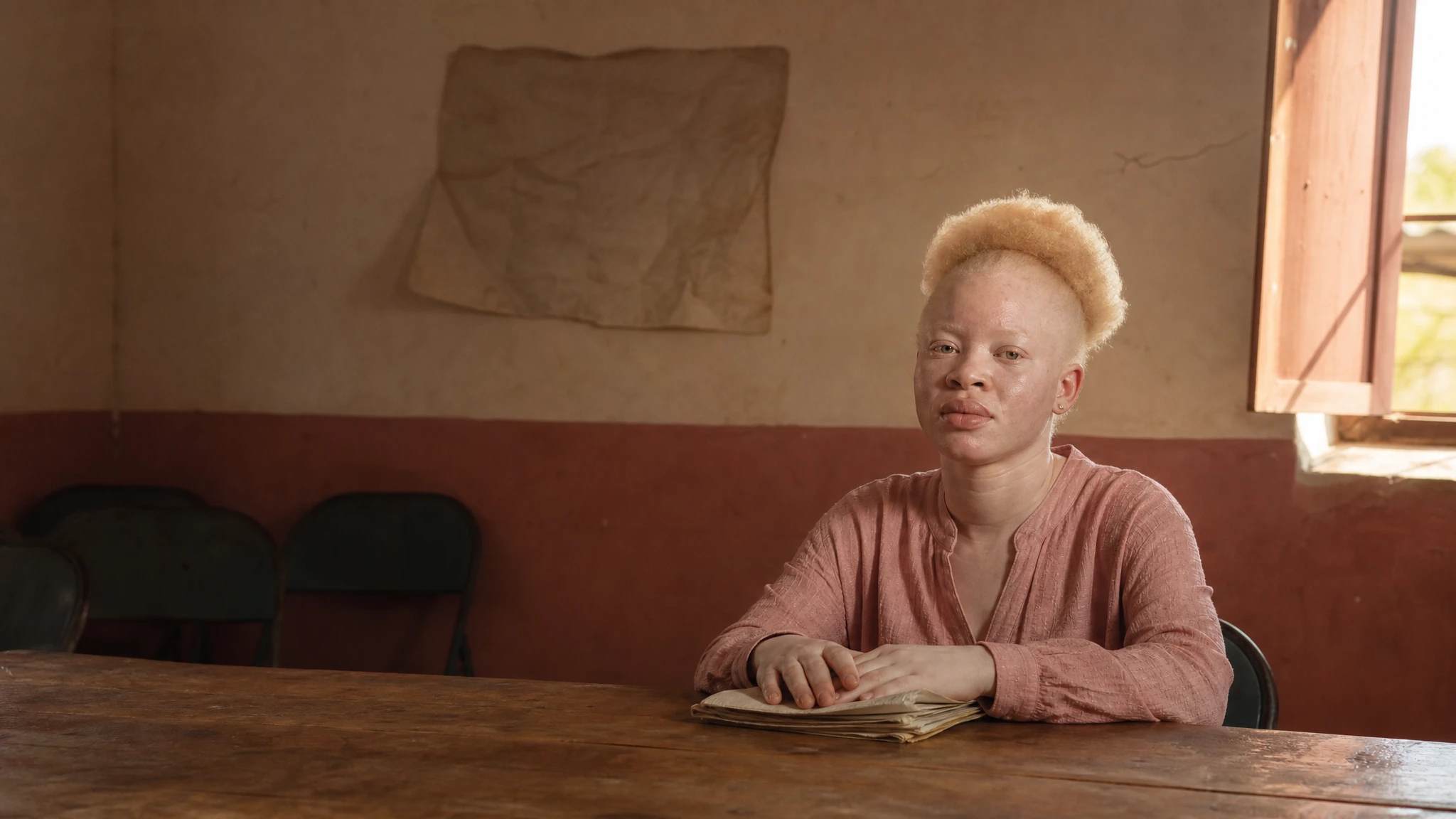
Structural inequality doesn't just worsen health crises — it creates the conditions that allow them to spread. People with albinism face compounding barriers when systems fail.
A single sentence carries the argument of the entire piece: inequality doesn't just make pandemics worse, it helps create the conditions for them to spread, persist, and return. AllAfrica reported this framing as a challenge to the dominant public health assumption that the next virus is the primary threat worth preparing for.
The article argues that structural disadvantage — uneven access to healthcare, housing, nutrition, and legal protection — functions as a kind of permanent, slow-moving crisis. According to the reporting, communities that already face exclusion from basic services are both more exposed when outbreaks begin and less able to recover once they subside.
For people with albinism, this framing is not abstract. Across Sub-Saharan Africa and parts of Latin America and Asia, people with albinism face specific, compounding barriers: limited access to dermatological care, higher rates of poverty, geographic isolation, and in some regions, the additional burden of social stigma that restricts movement and employment. The article does not address albinism directly, but the structural logic it describes maps directly onto the community's lived conditions.
Access is the gap that systems rarely close
The piece reported that health systems built around average users consistently fail people at the margins. Sunscreen, low-vision aids, and specialist dermatology — resources that are basic necessities for many people with albinism — remain inaccessible in high-burden regions not because they don't exist, but because supply chains, cost structures, and clinical priorities are arranged around different assumptions about who needs care.
This is the mechanism the article describes: inequality as infrastructure. The conditions that make a community vulnerable during a pandemic are the same ones that make them vulnerable the rest of the time. The pandemic reveals the gap; it does not create it.
The reporting also noted that recovery from health crises tends to follow existing lines of advantage. Wealthier, better-connected communities rebuild faster. Communities already operating under strain absorb the loss differently — and often permanently.
Why this matters for this community
The albinism community does not need a pandemic to experience what the article describes. The barriers are present in ordinary time: in a pharmacy that doesn't stock high-SPF sunscreen, in a clinic that has no low-vision protocol, in a school that has no shade. The argument the article makes — that inequality is itself a public health emergency — is one this community has lived without needing the language for.
Reporting like this matters because it shifts the policy conversation. When inequality is framed as a structural risk rather than a background condition, it becomes something systems are obligated to address, not simply acknowledge.
The story AllAfrica is telling is ultimately about visibility — about who gets counted when health systems plan for the future.
Keywords
Core topics and entities mentioned in this summary.