Healthcare professionals across Africa often work in contexts shaped by collective care, but their training rarely reflects this. A new analysis calls for change.
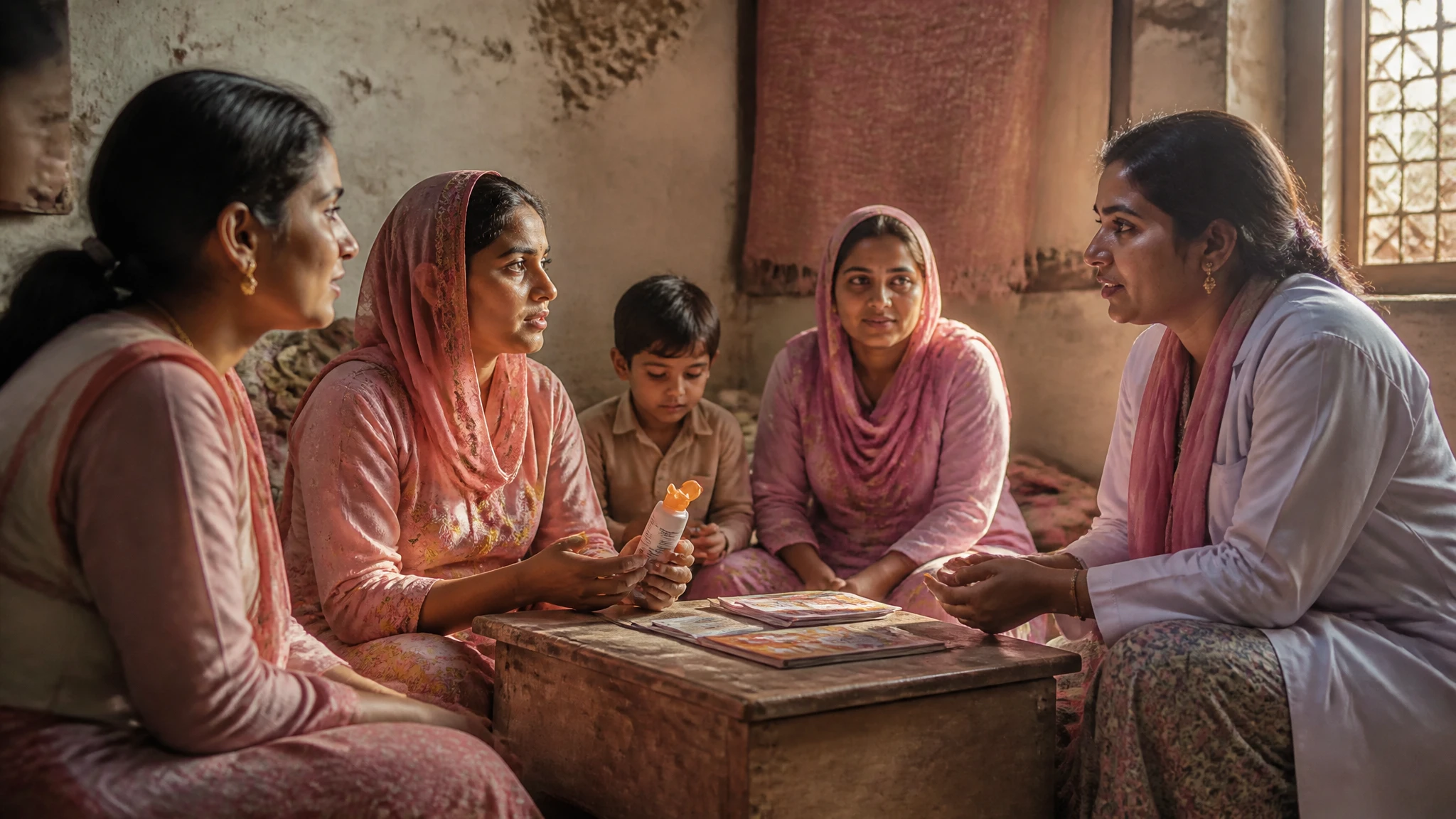
In many parts of Africa, a patient arriving at a clinic rarely arrives alone. Family members interpret, advocate, and make decisions alongside them. Community elders may hold weight in whether a treatment plan is followed at all. Yet the training most healthcare professionals receive was designed for a different picture entirely.
A new analysis published in The Conversation Africa argues that the gap between professional training and real-world practice is widening — and that patients are bearing the cost.
What the analysis found
The piece, written by researchers working in African health education, centres on a fundamental mismatch: curricula built largely on Western clinical models emphasise one-to-one doctor-patient relationships, individual consent, and private consultations. According to the researchers, these models sit uneasily in contexts where collective decision-making is the norm and where families are not peripheral to care but central to it.
The researchers reported that in many African countries, a patient's treatment outcome is often shaped as much by family consensus as by clinical instruction. They noted that when healthcare professionals are not trained to navigate these dynamics — to communicate with a family group, to respect community-level authority without overriding clinical judgement — misunderstandings compound and care suffers.
For people with albinism, this dynamic carries specific weight. Consultations about sun protection, vision support, or skin health frequently involve parents, siblings, and extended family. How a professional frames those conversations — whether they speak only to the individual, whether they address the family's questions, whether they understand what the community believes about albinism — shapes whether guidance is followed at all.
A call to redesign training
The researchers argued that health education across the continent needs to embed community and family dynamics into its core, not treat them as cultural add-ons. According to the analysis, this means training professionals to facilitate group consultations, to understand local belief systems without dismissing clinical evidence, and to see community members as part of the care relationship rather than obstacles to it.
The piece pointed to existing models in community health worker programmes as examples of training that already reflects these realities. The researchers suggested these could inform how medical schools and nursing colleges redesign their curricula.
The analysis does not offer a completed blueprint. It is a prompt — directed at educators, policymakers, and health institutions — to examine what assumptions are baked into their syllabuses and whose reality those assumptions reflect.
For a community that already navigates significant gaps in specialist care, the quality of the general healthcare encounter matters more, not less.
Keywords
Core topics and entities mentioned in this summary.