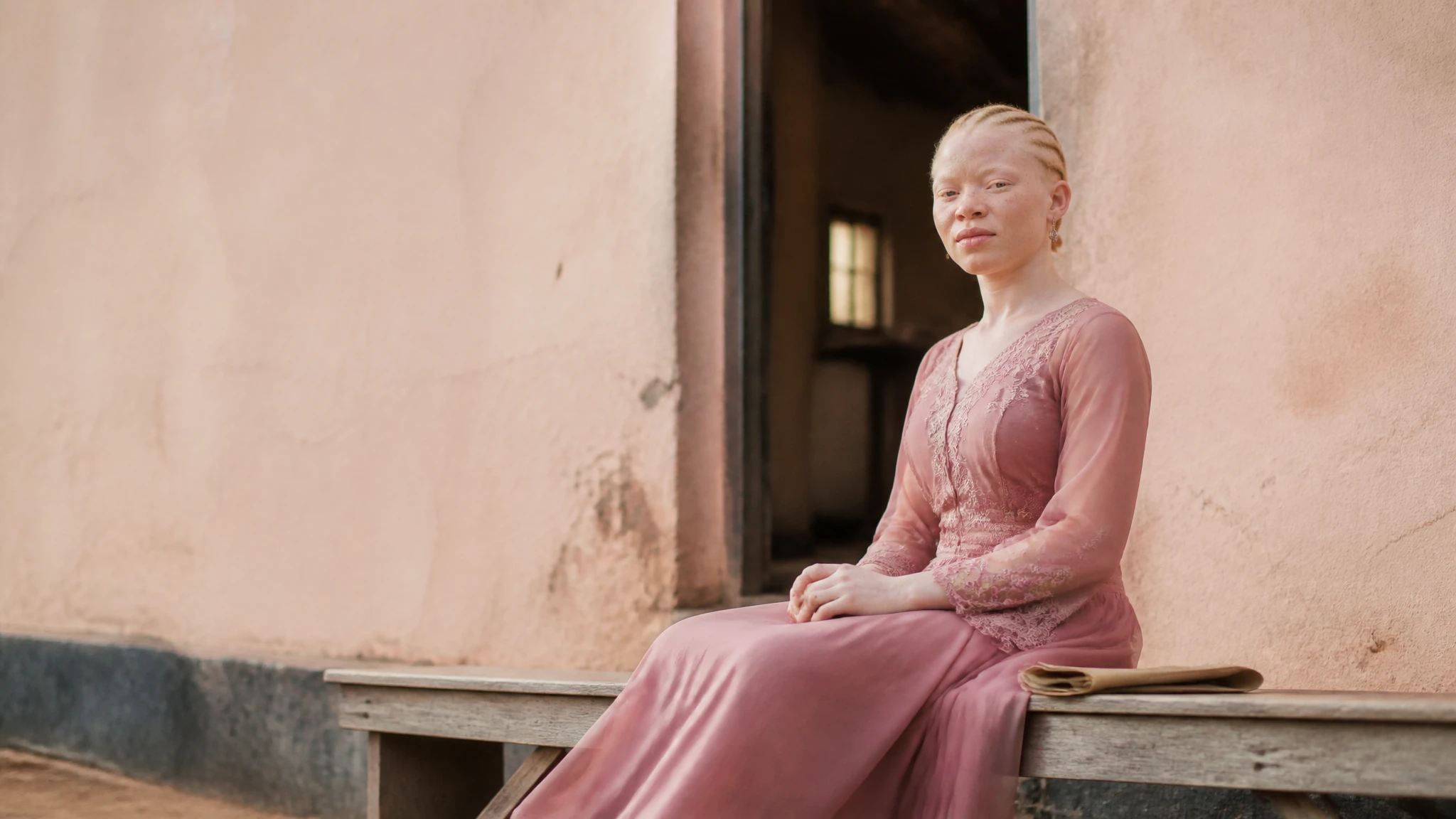
A new OHCHR report maps the barriers blocking people with albinism in Zambia from accessing justice, and outlines what needs to change.
In Zambia, a person with albinism who has experienced a crime faces a justice system that was not designed with them in mind. Courts lack accessible formats for those with low vision. Police stations are often far from rural communities where attacks are most likely to occur. Legal aid, where it exists, rarely reaches people who need it most.
The Office of the United Nations High Commissioner for Human Rights (OHCHR), through the Independent Expert on the enjoyment of human rights by persons with albinism, has documented these gaps in a report focused specifically on access to justice in Zambia. The findings describe a pattern: violations occur, but accountability does not follow.
What the report found
According to the OHCHR, people with albinism in Zambia face compounding obstacles at every stage of the justice process. Stigma shapes how complaints are received by authorities. Witnesses are reluctant to testify when perpetrators are known community members. Cases stall or are dismissed without adequate investigation, the report found.
The Independent Expert identified low awareness of legal rights among people with albinism themselves as a significant factor. Without knowledge of what protections exist — and how to claim them — many violations go unreported entirely.
The report also noted that Zambia has made some legislative commitments relevant to the rights of people with albinism. But legislation, the Independent Expert observed, does not automatically translate into practice at the local level where most people seek redress.
What the report recommends
The OHCHR outlined a set of concrete measures for Zambian authorities. These include training for law enforcement and judicial officers on the specific vulnerabilities faced by people with albinism, alongside stronger legal aid services in rural and peri-urban areas. The report also called for improved data collection — disaggregated by disability and condition — so that cases involving people with albinism are tracked rather than absorbed into broader statistics.
Community legal education was recommended as a practical entry point: people need to know their rights before they can exercise them, the report stated.
Civil society organisations working with people with albinism were identified as essential partners in both documentation and referral. The Independent Expert urged Zambian authorities to resource and consult these groups rather than treat them as peripheral.
The findings from Zambia are part of the Independent Expert's broader mandate to examine conditions for people with albinism across regions. Similar patterns — impunity, stigma, structural inaccessibility — have been documented in other Sub-Saharan African countries in previous reports.
For the people whose cases sit unresolved in Zambia's courts, or who never reached a courtroom at all, this report is a record that their experience was seen.
Keywords
Core topics and entities mentioned in this summary.